



Why Choose Dr Natasha Lim Eye Centre
Eye care should start with your needs, not a fixed treatment. At Dr Natasha Lim Eye Centre, the doctor looks at your eyes, talks through your concerns and explains the treatment options that may be suitable for you. You can then decide what feels right for you.
- About the Surgeon: Dr Natasha Lim is involved in the assessment and treatment process, from discussing your concerns to planning the appropriate procedure for your eyes.
- Modern Equipment: The clinic uses diagnostic imaging, laser systems and iDesign lasik customisation where appropriate to assess the eyes and support treatment planning.
- Personalised Treatment Plans: Your treatment plan is based on your eye examination, vision requirements and the findings from your consultation. The same procedure may not be suitable for every patient.
- Clear Consultations: You should leave a consultation knowing what is being discussed and why. The doctor will go through the findings, explain the treatment choices that may suit your eyes, and answer any questions you have before you decide.
- Follow-Up Care: Care does not stop on the day of the procedure. Follow-up visits give the doctor a chance to see how your eyes are healing, check your vision and talk through anything you notice during recovery.
Our Services
Different eye conditions call for different forms of treatment. From cataract surgery and presbyopia care to laser vision correction and retinal conditions, the services below cover a range of concerns that may affect your sight at different stages of life.
Presbyopia Correction
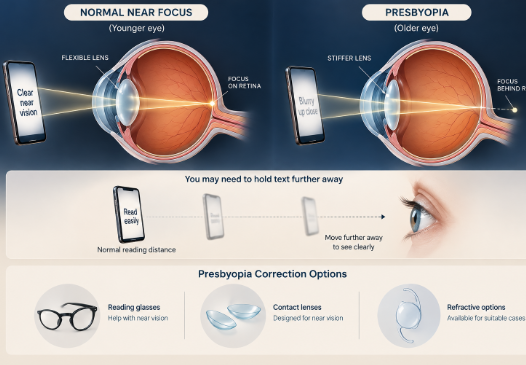
Need to hold your phone further away to read? That can happen with age. Presbyopia in Singapore affects near vision and can make reading or other close-up work less comfortable. Presbyopia correction in Singapore includes different treatment options, depending on the individual case. See what presbyopia correction options are available and how they work.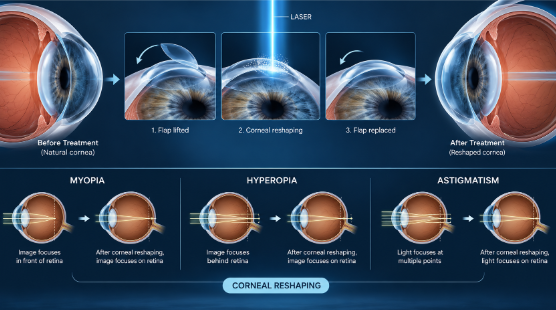
LASIK Surgery / iLASIK Surgery
LASIK is used to correct common vision problems such as short-sightedness, long-sightedness and astigmatism. LASIK surgery in Singapore changes the shape of the cornea using a laser. An iLASIK surgeon in Singapore can assess your eyes and prescription to see whether laser vision correction is suitable for you. Learn more about LASIK and iLASIK and what happens before treatment.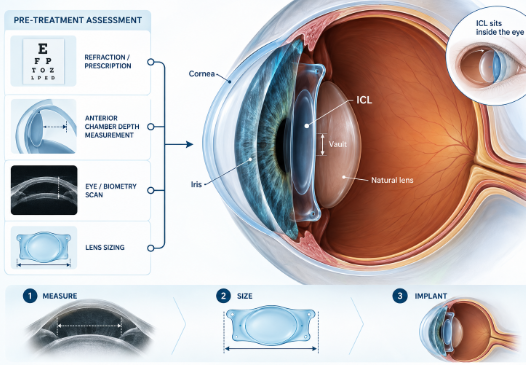
Implantable Contact Lens / Implantable Collamer Lens
An implantable lens sits inside the eye rather than on its surface. An implantable contact lens in Singapore may be considered for certain prescriptions where a lens-based approach is appropriate. The assessment includes measurements of the eye and a discussion about whether this type of lens fits your particular case. Thinking about an implantable lens? Learn how the procedure works and what is checked before treatment.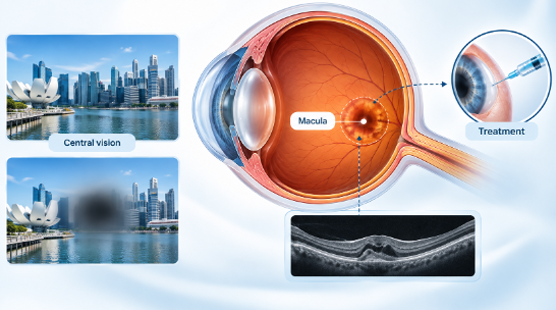
Macular Degeneration Treatment
Macular degeneration affects the central part of the retina and can interfere with detailed vision. The type of macular degeneration treatment depends on the form of the condition and what is found during the eye assessment. Regular monitoring may also be part of care, depending on the individual situation. Concerned about changes in your central vision? Learn more about macular degeneration and the treatment options that may be considered.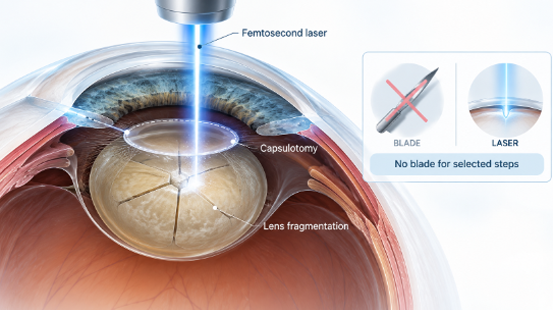
100% Bladeless Laser Cataract Surgery
Laser technology can be used for specific steps during cataract surgery. Bladeless cataract surgery refers to the use of a femtosecond laser rather than a surgical blade for those steps. The suitability of this approach is determined during the cataract assessment. Interested in bladeless cataract surgery? Read about how the procedure works and whether this approach may be suitable for you.FAQ
1. How do I know which eye treatment is right for me?
There is no single treatment that works for everyone. The doctor will check your eyes, look at your vision and go through your concerns before talking you through the options that may suit you.2. How do I know when a cataract needs treatment?
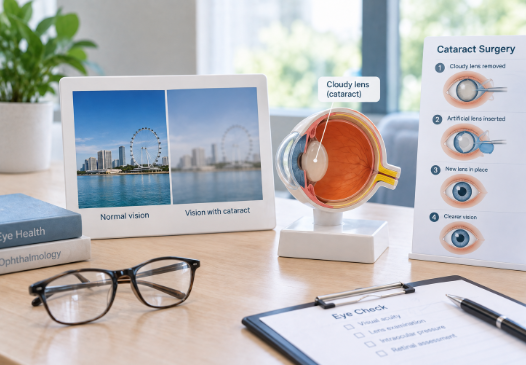
A cataract does not always need to be treated straight away. It may be time to consider surgery when cloudy vision starts making things like reading, driving or watching television difficult.3. What happens during cataract surgery?
Your surgeon takes out the cloudy lens from your eye and puts in a new artificial one. Before surgery, your doctor explains the alternatives for lens replacement and walks you through what to expect.4. Is LASIK suitable for everyone?
Not everyone is suitable for LASIK. Your prescription, cornea and general eye health need to be checked first. The doctor can then tell you whether laser eye surgery is an option for you.5. What is the difference between LASIK and iLASIK?
Both are used to correct certain vision problems with laser treatment. iLASIK also uses detailed measurements of the eye to plan the treatment. Your eye assessment will show which option may be suitable.6. What is an implantable contact lens (ICL), and who needs one?
For many prescriptions, you could use a lens in the eye to correct your sight. You might want to think about this lens if you have very high short-sightedness, or you aren’t suitable for a laser treatment (like LASIK).7. What is presbyopia and how do you correct it?
This is a common age-related change and may cause you to see things that are close as blurred. It can cause nearby objects to appear out of focus, which often means people hold their phone or book further away from their face. What you can do depends on your eye condition.8. What is bladeless laser cataract surgery?
This is a cataract operation that involves using a laser (called a femtosecond laser) to carry out some aspects of the operation. The doctor can tell you more about this versus traditional cataract surgery.9. What treatment is available for age-related macular degeneration?
That depends on which type of age-related macular degeneration you have. Some people only need regular check-ups, whereas others need treatment. The doctor will decide this after having examined your retina.10. What happens during an eye consultation?
You will be asked about your eyesight and any issues you may have noticed. The doctor will examine your eyes and perform any tests that are needed. The results can be explained once they are available to determine if you need treatment.Ready to Get Crystal-Clear Vision?
Every eye is unique, and so is every treatment plan. Whether you’re considering cataract surgery in Singapore, exploring lasik surgery, or investigating presbyopia correction, Dr Natasha Lim offers personalized consultations with advanced diagnostic technology and treatment methods.🔗 Schedule Your Eye Consultation Today | ☎️ +65 6570 2220 | 📧 dr@drnatashalim.com
